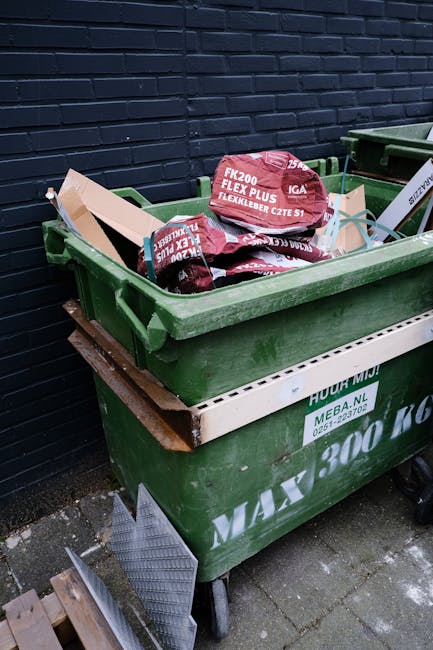
Battersea business rubbish contracts saving on collection: how local firms cut waste costs without cutting corners
If you run a business in Battersea, rubbish collection can feel oddly expensive for something so unglamorous. One week it's a few bags and some packaging; the next it's a burst of office clear-out waste, broken furniture, and the usual mystery pile that appears by the bins. Battersea business rubbish contracts saving on collection is really about making that routine cost more predictable, less wasteful, and a lot easier to manage.
Done properly, a business waste arrangement should match your actual output, not some inflated guess from months ago. That means fewer surprise charges, cleaner premises, less admin, and a service that fits how your team actually works. In practice, the savings come from smart scheduling, better segregation, honest volume estimates, and choosing the right waste stream for the right job. Sounds simple. It often isn't. But it can be.
This guide breaks down how local businesses in Battersea can save money on rubbish collection while staying practical, compliant, and sane. We'll look at the real levers that affect cost, the mistakes that quietly inflate invoices, and the steps that make a contract work harder for you.
Why Battersea business rubbish contracts saving on collection Matters
Waste collection rarely appears on a business plan as a profit centre, but it can leak money faster than people expect. A poor contract usually starts with a simple problem: the service no longer matches the business. Staff levels change, stock turnover shifts, fit-outs happen, or you move from mainly paper waste to packaging-heavy deliveries. The old collection pattern keeps ticking along, and the bill quietly climbs.
In Battersea, that matters even more because many businesses operate in compact spaces, shared buildings, mixed-use streets, or properties with limited access. You'll notice that a missed collection window can create knock-on effects immediately: cluttered storage rooms, blocked service areas, unhappy neighbours, and extra manual handling. No one wants to be shuffling cardboard down a narrow stairwell at 8am because the bin area filled up overnight.
Saving on collection is not just about chasing the lowest price. Truth be told, the cheapest-looking option can become expensive if it includes unnecessary lifts, over-sized containers, call-out add-ons, or inefficient visits. The smarter goal is value: the right frequency, the right container or pickup size, the right waste type, and the right level of support.
That's where a well-managed arrangement with a provider offering business waste removal becomes useful. The best contracts are built around your actual needs, not a one-size-fits-all service that assumes every business throws away the same mix of waste every week.
Practical takeaway: if your business waste bill feels "normal" but never seems to go down, the issue is often contract design, not just the volume of rubbish.
How Battersea business rubbish contracts saving on collection Works
At a basic level, a business rubbish contract sets out what is collected, how often, where from, and on what terms. The savings come from reducing wasted capacity and unnecessary handling. That might mean fewer collections, better waste separation, a revised pickup schedule, or switching to a more suitable service for heavier or mixed waste.
Here's the general flow. First, you review what is actually being thrown away. Then you identify whether the waste is mostly office waste, cardboard, furniture, builders' debris, garden waste, or something more mixed. Next, you compare the current arrangement against how your team operates now. Finally, you adjust the service so the contract reflects reality.
A good provider will normally look at:
- volume of waste generated each week or month
- type of waste being removed
- site access and loading conditions
- collection frequency
- whether waste can be separated for recycling
- special handling needs for bulky items or clearance jobs
If you are dealing with office furniture, old chairs, or a room full of unwanted desks, it may be more efficient to book a one-off clearance rather than keep paying for repeated general collections. Services like office clearance or furniture disposal can sometimes reduce the cost of a big clean-out compared with forcing everything into a standard contract model. That's a small detail, but it often makes a real difference.
There's also the question of how waste is prepared. If staff flatten boxes, keep recyclables clean, and separate bulky items from general rubbish, the collection process becomes easier and less expensive to run. Less labour, fewer mistakes, less contamination. Simple, yes. But also the bit many businesses forget.
Key Benefits and Practical Advantages
A properly structured collection contract can help in several ways, and not all of them are visible on the invoice. Some are operational. Some are environmental. Some just make the day smoother, which in a busy workplace is no small thing.
- More predictable costs: regular scheduling and clearer terms reduce unpleasant surprises.
- Less wasted capacity: you stop paying for collection space or frequency you don't use.
- Cleaner premises: better collection timing prevents overflow and storage mess.
- Better recycling performance: separating waste properly can lower the amount going into general rubbish.
- Less admin: one clear arrangement is easier to monitor than a patchwork of ad hoc removals.
- Improved staff efficiency: people spend less time dealing with waste clutter and more time on actual work.
There is a quieter benefit too: peace of mind. When the waste plan works, nobody is standing around asking, "Where do we put this?" on a Monday morning. That matters more than people admit.
For businesses that produce a mix of rubbish, a service such as waste removal can be a useful companion to a standard contract, especially when you need flexibility for unusual loads. And if the items are mostly broken fixtures, shelving, or renovation leftovers, a dedicated route like builders waste clearance may be more efficient than treating everything as generic commercial rubbish.
To be fair, not every company needs a complex set-up. Some businesses do best with a straightforward schedule and one clear bin arrangement. The win comes from matching the model to the actual operation.
Who This Is For and When It Makes Sense
This approach makes sense for almost any Battersea business that produces repeat waste, but it is especially helpful if your waste pattern has changed over time. That happens a lot. A business starts small, the waste arrangement is built for the early days, and then the team grows, stock increases, or the site changes use.
You may benefit from a review if you are:
- running an office with regular paper, packaging, and bulky items
- managing a retail space with stock packaging and display waste
- operating a cafe, salon, studio, or practice with limited back-of-house storage
- handling periodic refurbishments or small fit-outs
- dealing with a shared building where waste space is tight
- trying to bring down monthly overheads without disrupting operations
It also makes sense if your rubbish is lumpy rather than steady. For example, you may have quiet weeks followed by a burst of discarded packaging after deliveries, or a seasonal tidy-up that creates a pile of furniture, shelving, or old equipment. In those cases, a mixed approach often works better: regular collection for the basics, plus a separate clearance when needed.
Businesses with limited time are usually the first to feel the pain of a bad contract. If your manager is spending half an hour every Friday chasing bins, that's not just annoying. It's lost labour. And lost labour has a cost whether it is written down or not.
Step-by-Step Guidance
If you want to save on collection without making a mess of the service, use a proper review process. Here's a practical route that works well in real businesses.
- Track what is actually being thrown away. For one or two weeks, note the main waste types and how full your containers become.
- Separate by stream where possible. Cardboard, general waste, furniture, and reusable items should not all be bundled together by default.
- Check access and storage. A collection that is awkward to reach can cost more than the waste itself.
- Compare scheduled collection with ad hoc removal. Some businesses pay for routine visits they rarely need; others keep paying emergency rates because they have no plan.
- Review bulky-item handling. If you regularly dispose of desks, chairs, shelving, or damaged stock, use the most suitable service for the job.
- Ask for pricing clarity. Understand what is included, what triggers extra charges, and how missed collections are handled.
- Reassess every quarter or after major changes. New staff, new equipment, a move, or a refit can all change waste volume quickly.
If you are redesigning an office or clearing a workspace, it can be useful to pair the routine arrangement with office clearance or furniture clearance for one-off jobs. That keeps your ongoing contract focused on everyday waste while larger items are handled separately.
One useful trick, and it sounds almost too simple, is to take a photo of your waste area before and after collections for a week. It helps you spot patterns. You may notice that certain days are always overloaded, or that one container is barely used. Tiny clues, big savings.
Expert Tips for Better Results
Over time, the businesses that save most are not always the biggest ones. They are usually the ones that get organised early and keep the system honest. Here are the habits worth copying.
- Match collections to actual peaks: if your busiest waste days follow delivery days, align pickups accordingly.
- Flatten and bundle cardboard: this sounds basic because it is, but it can unlock a surprising amount of space.
- Keep clear signage near waste points: staff are more likely to separate rubbish correctly when the bins make sense at a glance.
- Use the right service for the right waste: don't force all waste into one bucket if furniture, garden material, or builders' debris needs different handling.
- Review access routes: a site with narrow stairwells, shared corridors, or basement storage often needs a cleaner pickup plan.
- Build waste into onboarding: new staff should know where waste goes from day one, not after the first messy week.
One detail people miss: if waste contamination is common, you may be paying for it twice. First in inefficient collection, then in a service that has to sort through mixed material. Not ideal. Not clever either.
A mild bit of housekeeping at the source often saves more than trying to negotiate a lower price later. That's the unglamorous truth.
Common Mistakes to Avoid
Most waste contracts go wrong for ordinary reasons, not dramatic ones. A business gets busy, nobody revisits the agreement, and the service drifts away from reality. The bill then rises in small, forgettable steps. Annoying, but very common.
- Keeping an old contract after operations change: what worked for a five-person team may be wrong for fifteen people.
- Over-ordering collections: paying for too many pickups is one of the easiest ways to waste money.
- Ignoring bulky items: chairs, furniture, and clearance waste can distort general collection costs.
- Mixing all waste together: contamination often reduces efficiency and can create avoidable extra work.
- Not checking access assumptions: if a provider expects easy frontage access and your site has none, prices can shift quickly.
- Failing to monitor fill levels: if no one checks how full the bins really are, the contract becomes guesswork.
A small real-world example: a Battersea studio with regular packaging waste and occasional furniture disposal kept a high-frequency collection schedule all year, even though most weeks the containers were only half used. Once they split out the furniture jobs and reduced the routine service, the whole arrangement became cleaner and simpler. Less waste of money, less waste of time. Which is the point, really.
Tools, Resources and Recommendations
You do not need fancy systems to manage rubbish well. But a few simple tools make the process easier and, frankly, less forgetful.
- Waste log: a basic spreadsheet or notebook that records collection days, container fill levels, and unusual loads.
- Site map: a quick sketch of where waste is stored, which route collectors use, and where bottlenecks happen.
- Photo record: useful for spotting overfilled bins, access problems, or recurring pile-ups.
- Staff instructions: a one-page guide on what goes into each bin and what must be separated.
- Quarterly review date: a recurring reminder to check whether the current arrangement still fits.
If your business has furniture, stock room items, or periodic clear-outs, keep a note of which jobs are better treated as special removals rather than routine waste. That distinction saves confusion later. It also helps when you are comparing quotes for a larger clearance against your normal arrangement.
For businesses that want better sustainability outcomes as well as lower collection costs, a page like recycling and sustainability is worth considering alongside the service itself. Cost saving and better resource handling often go hand in hand, not always perfectly, but enough to matter.
You may also find it useful to understand how provider policies sit behind the service. Things like health and safety policy, insurance and safety, and payment and security are not glamorous reading, sure, but they tell you a lot about how seriously the provider treats the job.
Law, Compliance, Standards, or Best Practice
Waste collection for businesses in the UK sits within a framework of legal duties and practical standards. The details can vary depending on the waste type and the nature of the business, so it is best to treat compliance as an active part of the contract, not a side note. If you're unsure, ask for clarification rather than assuming. That one habit avoids a lot of headaches.
At a sensible level, businesses should make sure waste is handled by a provider that can deal with it properly, that materials are described accurately, and that hazardous or restricted items are not mixed into general rubbish. It's also wise to keep records of what is collected and when, especially if you generate waste regularly or have mixed streams.
Good practice usually includes:
- keeping rubbish in suitable containers or designated storage areas
- separating recyclables where practical
- avoiding contamination of mixed waste
- using services appropriate to the waste type
- reviewing the contract after operational changes
Many Battersea businesses also prefer to work with providers that set out policies clearly. For example, if a business wants reassurance on standards and process, it can be helpful to review an about us page and the provider's published policies before agreeing to anything. That is not bureaucracy for its own sake. It is due diligence, plain and simple.
Where building work or fit-outs are involved, the line between general rubbish and construction-related waste matters more than people think. A separate route for builders waste clearance can be the safer, cleaner option when rubble, timber offcuts, packaging, and fixtures all appear at once.
Options, Methods, or Comparison Table
There is no single right setup for every business. The best choice depends on volume, waste type, access, and how predictable your waste is. The table below gives a quick comparison of common approaches.
| Option | Best for | Strengths | Watch-outs |
|---|---|---|---|
| Regular business rubbish contract | Steady day-to-day waste | Predictable, easy to manage, good for routine operations | Can become expensive if the frequency is too high |
| Ad hoc waste removal | Irregular or one-off loads | Flexible, useful for clear-outs and unusual jobs | Less predictable if used too often |
| Mixed approach | Businesses with routine waste plus occasional bulky items | Balances control and flexibility | Needs a bit more planning |
| Specialist clearance for bulky items | Furniture, equipment, or refit debris | Usually better suited to large or awkward loads | Not designed for everyday waste |
In many cases, the mixed approach is the sweet spot. A company keeps routine collection for general waste, then uses clearance services when storage room starts looking like a corridor sale. Not ideal to leave it too long, obviously.
Case Study or Real-World Example
Imagine a small Battersea consultancy in a shared commercial building. The team grew from six staff to fourteen over eighteen months. The original waste arrangement still assumed the old headcount, and the business had also taken on more packaging from product samples and deliveries. On paper, the collection contract looked fine. In reality, the bins were overflowing on busy weeks and barely used on quieter ones.
The first step was to separate regular office waste from occasional clear-out jobs. The second was to stop treating old chairs and unwanted shelving as if they belonged in the weekly rubbish stream. Once the business reviewed its waste pattern, it was able to use a more suitable routine arrangement and handle larger items separately through targeted clearance. The office felt tidier, the storage area stopped filling up, and the finance team had a clearer picture of waste costs. Not earth-shattering. Just better.
What mattered most was not a magic discount. It was alignment. The service finally matched the business it served. And that is usually where the savings come from.
Practical Checklist
Use this checklist before renewing or changing a collection arrangement:
- Do we know what waste types we produce most often?
- Are we paying for collection frequency we do not need?
- Have we separated routine waste from bulky or one-off items?
- Do staff know what goes where?
- Is the waste area easy and safe to access?
- Have we reviewed our arrangement after staffing or operational changes?
- Are recyclables being kept separate where possible?
- Do we understand any extra charges that might apply?
- Have we checked provider policies and service terms?
- Have we compared routine collection with clearance options for larger jobs?
If you can tick most of those off, you are already ahead of many businesses. If not, no drama. Start with the easiest fix first. Usually that is waste segregation or collection frequency.
Conclusion
Battersea business rubbish contracts saving on collection is less about squeezing a provider and more about getting a cleaner fit between your actual waste and the service you pay for. When the contract reflects the real rhythm of your business, the whole thing gets simpler: fewer surprises, fewer wasted pickups, less clutter, and a better handle on costs.
The best results usually come from steady habits rather than dramatic changes. Track what you throw away, separate what can be separated, and treat bulky clear-outs differently from everyday rubbish. That way, your waste system becomes one of those quiet things that just works. Which, let's be honest, is a lovely thing to say about rubbish.
If you are ready to review your current setup, start with the numbers you already have, then look at where the waste really comes from. The right arrangement is often closer than you think.
Get a free quote today and see how much you can save.
Frequently Asked Questions
What does Battersea business rubbish contracts saving on collection actually mean?
It means reviewing your business waste arrangement so you pay for the right collection frequency, waste type, and service level instead of overpaying for a contract that no longer fits.
How can a Battersea business reduce rubbish collection costs?
Most savings come from lowering unnecessary collection frequency, separating recyclable material, using the right service for bulky items, and keeping waste storage well organised.
Is it cheaper to have a regular contract or use ad hoc waste removal?
It depends on your waste pattern. Regular contracts usually suit steady, predictable waste. Ad hoc removal can work better for one-off loads or occasional bulky clear-outs.
What types of businesses benefit most from a review?
Offices, retail units, salons, cafes, studios, and shared workspaces often benefit because their waste output tends to change over time.
Can separating cardboard and recyclables really save money?
Often, yes. Cleaner waste streams can reduce contamination and make collections more efficient, which may lower the amount of general waste you pay to dispose of.
What if my business only has a small amount of rubbish?
Even small businesses should review their arrangement. A low volume of waste does not automatically mean the current contract is efficient, especially if collections are too frequent.
When should I use a clearance service instead of my normal rubbish contract?
Use clearance for one-off jobs like office refits, unwanted furniture, bulky equipment, or large site tidies. It keeps your routine collection focused on everyday waste.
Do I need to keep records of business waste collection?
It is good practice to keep basic records of what is collected and when. It helps with contract reviews and shows that you are managing waste responsibly.
How often should I review my waste contract?
A quarterly review is sensible for many businesses, and you should also revisit it after staffing changes, refurbishments, relocations, or changes in stock levels.
What are the biggest mistakes businesses make with waste contracts?
The most common mistakes are paying for too many collections, failing to separate waste streams, and leaving an old agreement in place after operations have changed.
Can a business waste arrangement help with sustainability goals?
Yes. Better segregation, less contamination, and more efficient collections can support recycling efforts and reduce avoidable waste going into general disposal.
Where can I find more information before booking?
It helps to check the provider's service pages, policies, and pricing information, then ask for a quote that reflects your actual waste volume and access conditions.
And if you want a bit more context on the service itself, you can always review the provider's pricing and quotes information alongside the waste options that best fit your site. A careful look upfront usually saves the most later.