Recycling and Sustainability — House Clearance Battersea
We are committed to delivering an eco-friendly waste disposal area approach for every job across Battersea and the surrounding boroughs. Our Battersea house clearance services put sustainability first, ensuring that every item removed from a property is assessed for reuse, repair, recycling or responsible disposal. This page explains how our house clearance in Battersea supports a low-carbon future, aligns with borough waste separation programs, and works with local partners to keep as much material as possible out of landfill.Our approach to a sustainable rubbish area combines practical on-site segregation with careful off-site processing. We operate a clear set of protocols so that bulky items, electricals, textiles and garden waste are separated at source. We tailor each clearance to local recycling rules and the Wandsworth approach to waste separation, which typically includes separate collections for dry recycling, food waste and garden waste alongside residual collections. This helps us direct materials to appropriate streams and maximise reuse opportunities.
Targets and performance: aiming for high diversion rates
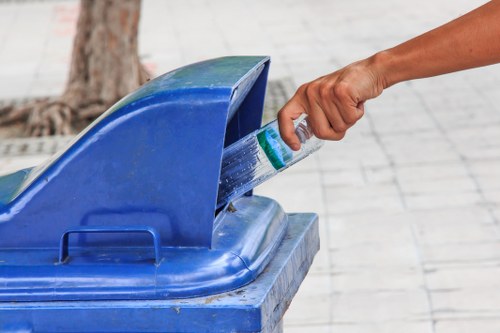
We have set an ambitious recycling percentage target to drive continuous improvement. Our operational goal is to divert at least 85% of all cleared material from landfill through recycling, donation and reprocessing. This target covers reuse of furniture and fixtures, recycling of metals and wood, safe processing of electronics, and composting of garden and food waste. We report progress internally and refine routes and sorting methods to keep improving that diversion rate.How we handle different waste streams
On-site sorting and clear labelling are core to achieving our sustainability goals. Our crews carry separate bins and secure sacks for:- metal and scrap
- paper, cardboard and mixed dry recycling
- WEEE (electricals and electronics)
- furniture and soft furnishings for donation or refurbishment
- garden and food waste for composting
We adapt to the specific requirements of the boroughs we serve. For example, many residents in Battersea and wider Wandsworth are accustomed to separate food waste and dry recycling collections; our teams follow the same separation logic so materials can be integrated into the council or licensed contractor systems seamlessly. That local alignment reduces processing steps and increases the probability that materials are recycled correctly.
 To make reuse a priority, we maintain active partnerships with charities and social enterprises. Usable furniture, bedding and household items that pass safety checks are offered to local charities and community reuse centres rather than being sent for disposal. We also connect with national and regional not-for-profits when items can be rehomed beyond the borough. These collaborations support local social value while extending the life of goods.
Our charity partners include furniture and textiles charities, community reuse projects and refurbishment workshops that provide training and employment. Items beyond direct donation but still recyclable—such as metal frames, timber and certain plastics—are delivered to licensed processors or transferred to specialist reuse brokers. The result is a resilient network that prioritises reuse and material recovery before energy-from-waste or landfill options are considered.
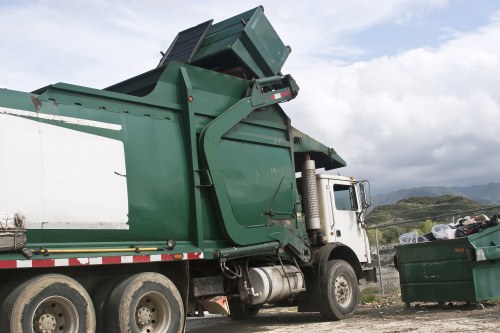
We also make use of local transfer stations and licensed transfer depots to maintain a low-carbon, compliant logistics chain. Rather than taking mixed loads directly to distant disposal sites, our vehicles call at nearby transfer facilities where materials are sorted and consolidated for onward recycling. This reduces unnecessary mileage and ensures materials enter the correct recycling circuits; where necessary we use authorised London transfer stations to route streams to accredited processors.
When hazardous or regulated items are present—such as asbestos-containing building materials, certain chemicals or controlled electronics—we follow strict handling and documentation procedures and deliver these materials only to licensed hazardous waste facilities. Responsible disposal of regulated waste protects local communities and the environment and is a non-negotiable part of our sustainability promise.
Transport and emissions are a major focus for creating a truly sustainable rubbish area. We invest in low-carbon vans, including plug-in electric vehicles and Euro 6 hybrid models, and operate route-optimisation software to cut mileage and idling time. Low-carbon vans not only reduce our operational emissions but also lower noise and air pollution in residential areas like Battersea.
 In addition to greener vehicles, our operational policies include consolidated collections to limit trips, scheduled calls to avoid congestion, and a preference for local processing to shorten supply chains. We regularly review our fleet mix and plan for increasing electrification as charging infrastructure in south-west London improves.
 Transparency, partnerships and continuous improvement are the pillars of our sustainability programme. We publish diversion targets internally, engage with local authorities on waste policy alignment, and maintain open relationships with charities, transfer stations and licensed reuse partners. Through these combined actions, our Battersea house clearance service strives to create an organised, sustainable rubbish area and an eco-friendly waste disposal area that residents and businesses can trust.
Summary of commitments: targeted 85% diversion rate, active charity partnerships, use of licensed transfer facilities, low-carbon vans and strict hazardous waste protocols. Together these measures help turn house clearance in Battersea into a force for reuse, recycling and reduced carbon impact.