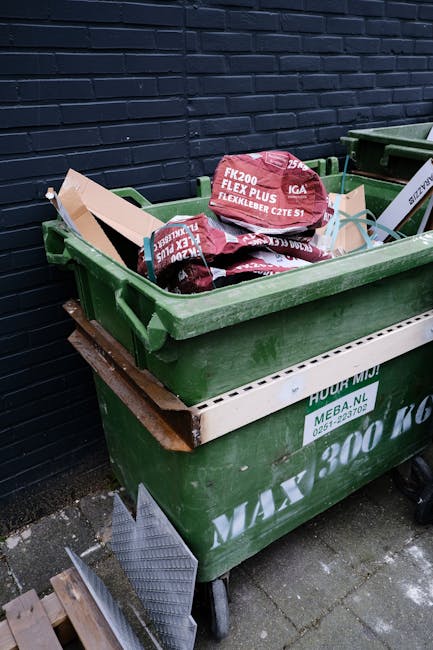
Insider tips skip hire versus rubbish removal in Battersea
If you are staring at a pile of old furniture, broken bits from a refurb, or a garden clear-out that has quietly grown legs, the choice between skip hire and rubbish removal in Battersea can feel oddly complicated. Do you want the flexibility of a skip on the street or driveway, or would you rather have a team come in, load everything for you, and disappear before the kettle has boiled? Truth be told, the best option often depends less on the waste itself and more on access, timing, budget, and how much hassle you are willing to deal with.
This guide gives you the insider view: when skip hire makes sense, when rubbish removal is the smarter choice, what people tend to overlook in Battersea, and how to avoid paying for the wrong solution. If you want a broader view of related services, it can also help to look at waste removal support and the wider range of home clearance options available locally.
By the end, you will know how to compare the two properly, ask better questions, and choose the route that saves time without creating extra headaches. And yes, there are a few little traps people fall into. Most are avoidable.
Table of Contents
- Why skip hire versus rubbish removal in Battersea matters
- How skip hire and rubbish removal work
- Key benefits and practical advantages
- Who this is for and when it makes sense
- Step-by-step guidance
- Expert tips for better results
- Common mistakes to avoid
- Tools, resources and recommendations
- Law, compliance, standards and best practice
- Options, methods and comparison table
- Case study or real-world example
- Practical checklist
- Conclusion
- Frequently asked questions
Why skip hire versus rubbish removal in Battersea matters
On paper, both services do the same basic job: they help you get rid of unwanted waste. In real life, they solve different problems. Skip hire gives you a container for ongoing, self-managed disposal. Rubbish removal gives you a hands-off clearance service where a team does the lifting and loading for you.
That distinction matters a lot in Battersea. Streets can be tight, parking can be awkward, and many properties are flats, terraces, mews homes, or converted buildings with limited outside space. If you do not have room for a skip, the cheapest-looking option can quickly become the most annoying one. You may also find that the waste type matters more than you expected. Heavy builders' rubble, mixed renovation waste, garden cuttings, old sofas, office clutter, and loft junk all behave differently in terms of loading, disposal, and labour.
There is also the practical side. Skip hire is usually best when you want time and control. Rubbish removal is usually best when you want speed and convenience. Neither is universally better. That is the point most people miss at first glance.
Expert summary: If you have space, time, and a lot of waste to fill gradually, skip hire can work well. If access is tight, the waste is awkward, or you want the job finished in one visit, rubbish removal often makes more sense.
In Battersea especially, the "best" choice is often the one that fits your property as much as your rubbish pile.
How skip hire and rubbish removal work
Skip hire in simple terms
Skip hire means a skip is delivered to your property or placed nearby if permitted. You fill it yourself over a set hire period, then it is collected when full or when the hire ends. It is a fairly straightforward model, and for ongoing projects it can be very practical. If you are doing a room-by-room declutter or a renovation that spans several days, the rhythm can suit you nicely.
The catch? You need enough space for the skip, enough access for delivery, and a plan for what can and cannot go in it. Overfilling, mixing the wrong materials, or leaving the waste half-scattered around the skip defeats the point rather quickly.
Rubbish removal in simple terms
Rubbish removal is more of a service than a container. A team arrives, lifts the waste, loads it into their vehicle, and takes it away. This is especially useful for bulky items, awkward access, or situations where you simply do not want the physical job on your shoulders. Let's face it, a third-floor flat without a lift is not exactly skip-hire paradise.
This option is popular for one-off clearances, furniture disposal, garage clear-outs, loft jobs, and situations where the mess is there now and needs to be gone today. It can also be a neat fit for homes and businesses that need the space cleared quickly, such as an office shutdown or a post-refurb clean-down. If that sounds familiar, a dedicated office clearance or garage clearance service may be the cleaner route.
What actually happens on the day
With skip hire, the process starts with delivery and ends with collection. In between, you do the loading. With rubbish removal, the heavy lifting is included, and the job usually finishes much faster. You will notice the difference most when the waste is awkward: wardrobes, broken drawers, mattress-heavy corners, plasterboard offcuts, or damp cardboard that seems to have absorbed half the atmosphere.
If your project creates mixed waste in bursts rather than all at once, that difference matters a lot.
Key benefits and practical advantages
Why skip hire appeals to many people
- It gives you time. You can fill it gradually, which suits longer projects.
- It can be cost-effective for large volumes. Especially when you have a steady stream of waste.
- It keeps the waste on site. Handy if the job runs over several days.
- It works well for predictable waste. Builders' rubble, soil, and renovation debris are common examples.
For some households, that control is worth a lot. You can sort as you go, keep the place tidy between loading sessions, and avoid repeated collections. If you are stripping a room or clearing a property bit by bit, that can be a real plus.
Why rubbish removal is often the better experience
- No manual loading from you. That is a big one.
- Usually faster. A crew can clear a surprising amount in a short visit.
- Better for bulky items. Especially furniture and odd-shaped waste.
- Helpful in tight access properties. Common around Battersea flats and narrow roads.
Rubbish removal also reduces the "I will do it later" problem. We have all seen a pile that grows from two bags into a small sculpture by the front door. A removal crew tends to break that cycle quickly.
The hidden practical advantage people forget
The best option is not always the one with the lower headline price. It is the one that reduces wasted time, repeated effort, and unplanned extra costs. For example, a skip might look cheaper until you factor in parking complications or permit issues. Meanwhile, rubbish removal might appear pricier until you realise it avoids several trips, lifting injuries, or the need to arrange help from two friends and a questionable trolley.
Who this is for and when it makes sense
This choice is relevant to homeowners, tenants, landlords, tradespeople, business owners, and anyone in Battersea dealing with more waste than the normal bin collection can sensibly handle. It is especially useful if you are preparing for a move, clearing a flat after a tenancy, tackling a renovation, or dealing with years of stored clutter in a loft or garage.
Skip hire tends to suit you if:
- You have space on private land for a skip.
- Your waste will be generated over several days.
- You are comfortable loading it yourself.
- You have mainly heavy, consistent waste.
Rubbish removal tends to suit you if:
- You want the job done in one go.
- You have bulky furniture or awkward items.
- You live in a flat or limited-access property.
- You do not want to handle lifting and carrying.
There is also a middle ground. Some people start with rubbish removal for bulky items, then use skip hire later for the leftover building waste. That can make sense on mixed projects. To be fair, mixed projects are where most of the judgement calls happen.
If you are dealing with a property clearance rather than just a few bags, it is worth looking at more specific services such as flat clearance, house clearance, or loft clearance depending on where the waste is coming from.
Step-by-step guidance
- List the waste by type. Separate bulky items, builders' waste, garden waste, and general rubbish. This helps you avoid guesswork.
- Estimate volume honestly. People nearly always underestimate. A small pile in the corner can be more awkward than it looks.
- Check access. Measure gates, stairwells, hallway turns, and parking space. If access is tight, rubbish removal often wins.
- Think about timing. If you need time to load gradually, skip hire may be practical. If you want it gone today, removal is more suitable.
- Consider the labour side. Who is actually moving the waste? If that answer is "you and your back", pause for a moment.
- Match the service to the material. Heavy rubble, mixed household waste, furniture, and garden debris may each point to a different solution.
- Ask about disposal routes and sorting. A good provider should be clear about what happens to the waste afterwards.
- Compare total cost, not just the upfront rate. Include loading time, permits if relevant, and the risk of needing a second collection.
A useful trick is to picture the job at 8am and again at 4pm. Will you still be happy doing the lifting by then? If not, you probably want a service that does the heavy work for you.
Expert tips for better results
1. Choose the service based on access first, price second
In Battersea, access can be the deciding factor. A skip is excellent on a driveway or a proper worksite. On a narrow residential road, or in a building with no easy frontage, it can become a logistical puzzle. Rubbish removal is often the calmer choice in that situation.
2. Separate reusable items before the waste is collected
If there are items worth passing on, move them out early. Once a pile is treated as waste, it usually stays that way. Furniture, especially, can sometimes be dealt with more thoughtfully through furniture clearance or furniture disposal, depending on condition and volume.
3. Keep the load dry if you can
Rain changes everything. Wet cardboard, soaked plasterboard, and soggy garden waste can quickly become heavier and messier. A covered area or a timely collection can save you from a grim, slippery afternoon.
4. Book earlier than you think
Good timing matters, especially around busy weekends, month-end moves, and the tail end of renovation schedules. If you leave it until the last minute, you end up choosing from whatever is left, which is never a great feeling.
5. Use the service to simplify the whole job
People often focus only on disposal. But the real benefit is simplification. A tidy clearance can reset a room, reduce stress, and make the rest of the project easier. That emotional effect is real. You feel it when the space finally breathes again.
Common mistakes to avoid
- Choosing a skip when there is nowhere sensible to put it. This sounds obvious, yet it happens a lot.
- Ignoring the lifting work involved. A cheap option is not cheap if it ruins your weekend.
- Mixing incompatible waste types without checking first. Some materials need special handling.
- Forgetting that access changes the true cost. Narrow stairs, parking restrictions, and long carry distances all matter.
- Ordering too much capacity too soon. Overbuying is easy when you are staring at a messy room.
- Assuming every clearance job is the same. A garden clearance is not an office clearance, and a loft clear-out is rarely as simple as it first looks.
One classic mistake is waiting until the pile becomes unbearable. Suddenly you are surrounded by boxes, an old chair, half a shelving unit, and that one mystery item nobody remembers buying. Better to act earlier, honestly.
Tools, resources and recommendations
You do not need fancy tools to decide between skip hire and rubbish removal, but a few simple things help:
- Measuring tape. Check access routes, especially for flats and terraced homes.
- Phone camera. Take clear photos of the waste from different angles.
- Basic room measurements. Useful when estimating volume.
- Notes on waste type. Separate general household waste, heavy waste, garden waste, and furniture.
- A simple plan for reuse or recycling. This can reduce the amount that needs collecting.
If the job is part of a larger project, service pages such as builders waste clearance, garden clearance, and business waste removal can help you match the right approach to the setting.
For people who like to keep things tidy and predictable, it also helps to review practical company information such as pricing and quotes, payment and security, and recycling and sustainability. Those pages are not glamorous, granted, but they do tell you a lot about how a provider operates.
Law, compliance, standards and best practice
Waste should always be handled carefully and in line with accepted UK practice. You do not need to become a compliance expert, but it is sensible to understand a few basics. A reputable service should be able to explain how waste is transported, separated, and passed on for lawful disposal or recovery. If anything sounds vague, ask again.
For skip hire, a permit may be needed if the skip is placed on public land or a highway, depending on the circumstances. That is one of those boring details that suddenly becomes very important. For rubbish removal, the provider should still be able to show that waste is handled properly and not dumped irresponsibly.
Best practice is simple: use a provider that is clear about safety, insurance, responsible disposal, and how they manage different waste streams. It is also sensible to check company policies where relevant. Pages like health and safety policy, insurance and safety, terms and conditions, and complaints procedure can give you a better sense of professionalism and accountability.
If you are clearing waste from a business premises, a commercial setting, or a shared building, the standards should be even more consistent. No one wants the aftermath to be messier than the original problem.
Options, methods, and comparison table
Here is the straightforward comparison most readers want. Not glossy. Just useful.
| Factor | Skip hire | Rubbish removal |
|---|---|---|
| Best for | Ongoing projects, heavy volume, gradual loading | Bulky items, quick clearances, awkward access |
| Labour from you | High | Low |
| Speed | Slower overall if you are loading it yourself | Usually faster on the day |
| Space needed | Enough room for a skip and delivery access | Minimal space required |
| Convenience | Good for long jobs | Very good for one-off clearances |
| Access challenges | Can be difficult in tight Battersea streets | Often easier in flats and restricted properties |
| Common user | Renovators, gardeners, DIY projects | Households, landlords, offices, estate clearances |
If your waste is mostly home clutter, old furniture, or mixed household items, removal is often easier. If the job is a slower build-up of rubble or renovation debris and you have the space, skip hire can still be the right call. Simple, really. Though of course real homes are rarely simple.
Case study or real-world example
A Battersea tenant is moving out of a two-bedroom flat after years of accumulated bits: a broken bedside table, a mattress, several bags of general clutter, and a stack of boxes that has somehow become part of the decor. At first, they consider a skip. It sounds tidy. It sounds cheap enough.
Then they look at the building: no driveway, limited outside space, and a stairwell that already feels narrow with one bag in hand. In that situation, rubbish removal is usually the cleaner solution. A crew can carry the items out, load them quickly, and avoid turning the hallway into a mini obstacle course.
Now compare that with a bathroom renovation where the waste appears over a week: tiles, plasterboard, packaging, and a steady stream of debris. A skip might be the more practical choice because it allows ongoing loading without repeated collection visits. Different problem, different answer.
The lesson is not that one option is always superior. It is that the property, the pace of the project, and the type of waste should decide the service. That is the insider bit, really.
Practical checklist
- Confirm what type of waste you have.
- Estimate how much there is, including hidden waste in lofts or cupboards.
- Measure access points, stairs, gates, and parking space.
- Decide whether you want to load the waste yourself.
- Check whether the job will happen in one day or over several days.
- Think about bulky items that may need lifting assistance.
- Consider whether the waste needs sorting or recycling.
- Review the provider's pricing, payment, and safety information.
- Ask how collections are timed and what happens if the load changes.
- Make sure your chosen method matches the reality of your Battersea property, not the ideal version of it.
A small amount of planning here saves a surprising amount of stress later on. Not always, but often enough that it is worth the five minutes.
Conclusion
When you compare skip hire versus rubbish removal in Battersea properly, the answer usually becomes clearer than people expect. Skip hire works well when you have space, time, and a job that unfolds gradually. Rubbish removal works well when access is tight, the waste is bulky, or you want the whole thing handled quickly and cleanly.
The real insider tip is this: do not choose based on habit. Choose based on the property, the waste, and the kind of day you want to have. If that means a skip, fine. If it means a team turning up, lifting everything, and leaving the place calmer than they found it, even better.
If you are still weighing up your options, a careful quote and a few clear photos usually make the decision easier. And once the clutter is gone, the room feels different. Lighter somehow. That matters more than people think.
Get a free quote today and see how much you can save.
Frequently Asked Questions
Is skip hire cheaper than rubbish removal in Battersea?
Not always. Skip hire can look cheaper at first, especially for large volumes, but you should factor in loading time, access, and any permit issues. Rubbish removal may cost more upfront but save effort and avoid extra complications.
Which is better for a flat in Battersea?
Rubbish removal is often better for flats because access is usually tighter and there is less room for a skip. If you live in a building with stairs, shared entrances, or restricted parking, removal is usually the easier route.
What type of waste is best for skip hire?
Skip hire is often a good fit for builders' waste, mixed renovation debris, and projects where waste accumulates over time. It is less convenient for a few bulky items or a one-off clear-out.
Can rubbish removal handle furniture?
Yes, bulky furniture is one of the most common reasons people choose rubbish removal. Sofas, wardrobes, tables, and beds can usually be collected without you having to carry them out yourself.
Do I need to load the skip myself?
Yes, in standard skip hire you load it yourself. That is the core difference. If you want the lifting done for you, rubbish removal is usually the better choice.
How quickly can rubbish removal happen?
Often very quickly, depending on availability and the size of the job. It is commonly used when people need a same-day or next-day clearance and do not want a longer hire period.
Is a skip allowed on the road in Battersea?
Sometimes, but it may require permission or a permit depending on where it is placed. If you are considering roadside placement, it is wise to check the practical and legal side before booking.
What if I am clearing both furniture and garden waste?
That mixed load can go either way, depending on volume and access. If the furniture is bulky and the garden waste is loose, a rubbish removal service is often more convenient. For larger garden jobs, you may also want to review garden clearance.
Is skip hire or rubbish removal better for a house clearance?
For most house clearances, rubbish removal is simpler because it includes lifting and loading. If you have a major renovation or a long project with steady waste, a skip may still be useful.
What should I ask before booking either service?
Ask about access requirements, what waste is accepted, how pricing works, whether labour is included, and how the waste will be handled afterwards. Those questions save a lot of confusion later on.
Can I compare multiple services before deciding?
Absolutely. In fact, that is the sensible move. Compare the total cost, the labour involved, the timing, and how well each option suits your property. A few clear quotes often tell you more than a long phone call.
What is the most common mistake people make?
Choosing based only on the visible price. The real cost includes access, effort, time, and whether the service fits the building. Once you add those pieces up, the "cheaper" option is not always cheaper.